The Age Debate: Shaping Leadership
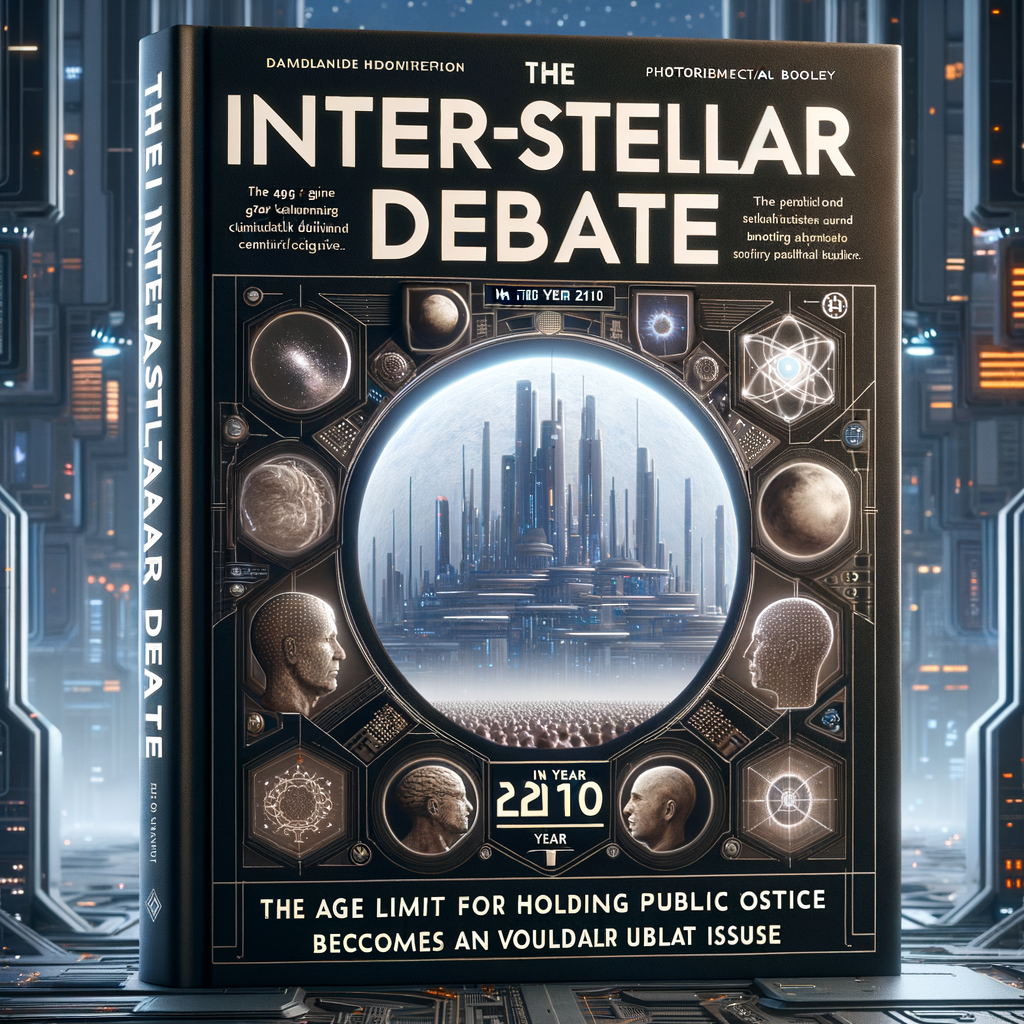 Fiction created by GPT based on this news article.
The Interstellar Debate
In the year 2110, the age limit for public office had become a central issue in the presidential election. History had shown that memory problems and cognitive decline could be detrimental to the country, and political opponents were using it as a weapon in their battle for the presidency.
The two presidential candidates, Jack Reynolds and Marcus Thompson, were both esteemed politicians, but their opponents were quick to point out their age. Reynolds, at 86, would be the oldest president ever, while Thompson, at 83, wasn’t far behind. And with the advances in medical technology, they could potentially serve multiple terms, raising concerns about their cognitive abilities and mental fitness to lead the country.
The age debate had gained momentum when the special counsel, Dr. Evelyn Hur, released a report claiming that Reynolds had displayed memory problems during a recent public appearance. The report had caused a frenzy among Thompson’s supporters, who saw it as an opportunity to gain an advantage in the polls.
The news of the report spread like wildfire across the interstellar network, drawing the attention of the public and the media. People were divided, with some believing that age shouldn’t be a determining factor in a candidate’s ability to lead, while others argued that the mental sharpness of a president was crucial to the nation’s well-being.
As the debate raged on, both candidates faced relentless scrutiny over their mental acuity. Reynolds had been caught mixing up historical events in a speech, while Thompson had mistakenly referred to a prominent world leader by the wrong name. The media had a field day, dissecting and analyzing every slip-up, further fueling the age debate.
The situation was reminiscent of the past, when Earth’s political landscape had been marred by similar controversies. History had a way of repeating itself, and the age-old issue of mental decline in political leaders had resurfaced, becoming a focal point of the presidential race.
In a bid to address the growing concerns, Reynolds and Thompson embarked on rigorous campaign trails, hoping to demonstrate their vitality and mental acuity to the public. They crisscrossed the country, engaging with voters and participating in televised debates, each trying to outshine the other in a bid to prove their fitness for office.
The public and the media closely monitored the candidates’ every move, analyzing their speeches, mannerisms, and physical appearance for signs of aging or cognitive decline. It became a spectacle, with the presidential race turning into a battle of age and mental prowess.
Meanwhile, Dr. Evelyn Hur found herself at the center of the storm. Her report had ignited a fierce debate, and she was summoned to testify before a special committee convened to investigate the matter. As a renowned expert in cognitive science, she was expected to shed light on the implications of age-related memory problems in political leaders, and her testimony would be pivotal in shaping public opinion.
The hearing was broadcast across the interstellar network, drawing a massive audience eager to hear Dr. Hur’s insights. She presented her findings with precision and eloquence, highlighting the complexities of the human brain and the impact of aging on cognitive function. Her testimony provided valuable context to the age debate, prompting a deeper understanding of the issues at hand.
As the hearing unfolded, it became increasingly clear that the age debate was not just limited to the present candidates, but was a broader reflection of societal attitudes towards aging and mental health. It sparked a much-needed conversation about ageism and the cultural biases that influenced perceptions of leadership and competence.
The public discourse took a profound turn, with people from all walks of life engaging in thoughtful discussions about the intersection of age, power, and mental acuity. The presidential race had inadvertently become a catalyst for social change, prompting a reevaluation of deeply ingrained biases and stereotypes.
In the midst of the controversy, a young cognitive scientist, Dr. Aria Patel, emerged as a prominent voice in the debate. Her groundbreaking research on cognitive aging and brain health garnered widespread attention, and she became an advocate for challenging ageist assumptions in political leadership.
Dr. Patel’s insights reframed the age debate, shifting the focus from a narrow assessment of the candidates’ cognitive abilities to a broader examination of the societal attitudes that shaped perceptions of aging and mental decline. Her thoughtful analysis resonated with the public, inspiring a new wave of advocacy for inclusive and equitable representation in leadership.
The presidential race had become a transformative moment in history, sparking a movement towards greater awareness and understanding of age-related biases. People began to question the entrenched narratives that had perpetuated ageism and discrimination, paving the way for a more inclusive and progressive society.
As the election drew near, the age debate had evolved into a powerful catalyst for change, igniting a passionate dialogue about the role of age in leadership and the need to challenge outdated stereotypes. The candidates, Reynolds and Thompson, found themselves at the forefront of a monumental shift in public consciousness, and their campaigns had inadvertently sparked a movement towards a more enlightened and equitable future.
On election day, the people made their voices heard, casting their votes not based on age, but on the candidates’ vision, integrity, and character. The historic election marked a turning point in interstellar politics, ushering in a new era of inclusivity and progress, and paving the way for a future where age would no longer be a barrier to leadership.
The age debate, once a contentious issue that had divided the nation, had ultimately become a force for positive change, transforming the political landscape and redefining societal attitudes towards age and leadership. As the newly elected president took office, the legacy of the age debate lived on, inspiring future generations to challenge stereotypes and embrace a more inclusive and enlightened vision of leadership.