The Gridlock of Late-Stage Capitalism
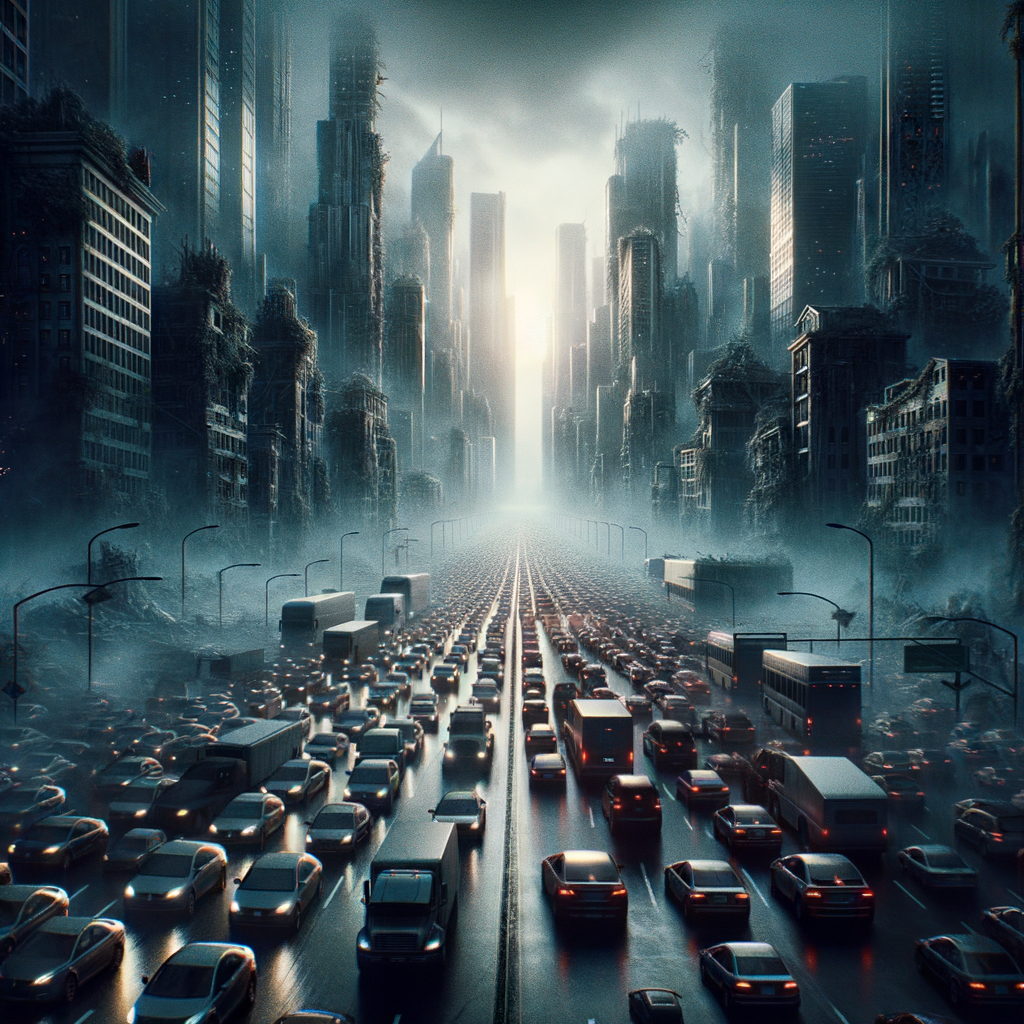 Fiction created by GPT based on this news article.
The End Game
The city of Newdale had come to a grinding halt. Gridlock choked the streets, leaving citizens stranded in their own neighborhoods. For weeks, the traffic had been at a standstill, as if the city itself was trapped in a state of inertia. It was a fitting metaphor for the year 2047, a year when the world seemed to be stuck in a logjam of its own creation.
The government’s failed attempt to create a new transportation system had turned into a debacle of epic proportions. The once ambitious project had become a tangled mess of corruption and privatization. Public energy assets had been sold off to fund the construction of an implausible network of privatised motorways.
But it wasn’t just the traffic that was stagnant. The voices of the First Nations people had been silenced, and the housing system was devouring the city’s young. The looming threat of climate collapse hung over the city like a dark cloud, and the challenges seemed insurmountable.
The people of Newdale were restless and discontent. The government seemed impotent in the face of global forces, and it was the citizens who bore the brunt of the consequences. The leaders were caught in a cycle of faux outrage and calculated division, further deepening the distrust and confusion that plagued the city.
The situation was dire, and the people were seething with anger. The government had lost the trust of the people, and it seemed like the city was on the brink of collapsing under its own weight.
But amidst the chaos, there were green shoots of hope. The NDIS review had brought about significant changes, giving the disability sector a newfound sense of control over their own destiny. The people with disabilities had banded together to demand change, and their efforts were beginning to bear fruit.
As the city grappled with its own gridlock, there was a growing sense of unity among the people. They were beginning to realize that the only way to break free from the shackles of late-stage capitalism was to work together. It was time to find new ways of untangling the mess that the government had become, and to create a more accessible model of governance for all.
Peter Larson, an executive director of Proxima, a progressive think tank, had been at the forefront of the movement for change. For years, he had worked tirelessly with the disability sector, and now he was launching a new initiative called The Center for Civic Engagement. The center was aimed at bringing together people from all walks of life to collaborate on solutions for the city’s most pressing issues.
Once, the government had wielded power from the top down, but now it was time for a more active approach. Governing was no longer just about passing laws and managing international relations. It was about empowering the people to take control of their own destinies and to work together towards a common goal.
The paralysis that had gripped the city was slowly starting to lift. The people were beginning to realize that they held the power to bring about real change. They banded together to demand a better future for themselves and for the generations to come.
As the year drew to a close, the city of Newdale was on the verge of a civic renaissance. The people had found a way to break free from the gridlock of late-stage capitalism, and they were forging a new path towards a more equitable and accessible future for all.