Rising from Chaos: A Renewed Hope
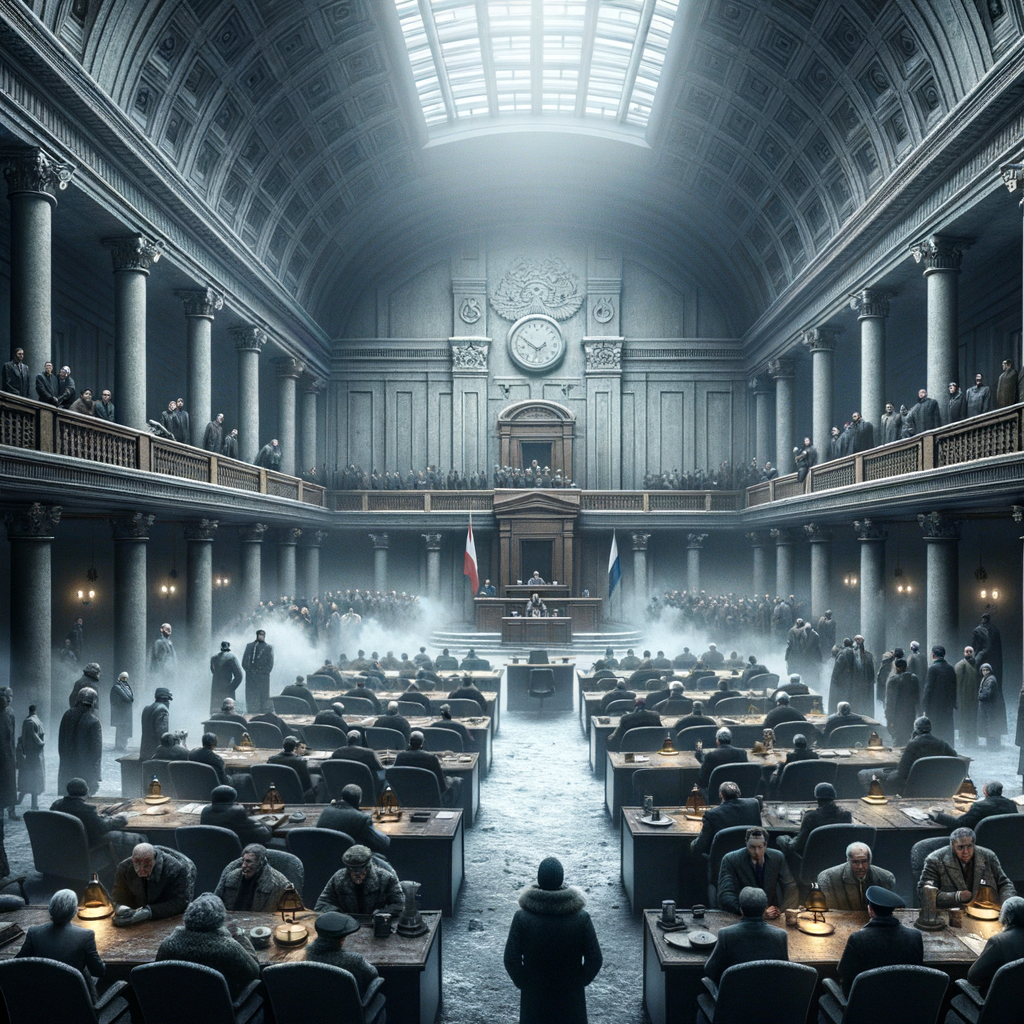 Fiction created by GPT based on this news article.
It was a cold and dreary day in Poland’s parliament, and the air was thick with tension and anticipation. The members of the new government were preparing for a vote of confidence, and the atmosphere was charged with nervous energy. But everything came to a sudden and shocking halt when Grzegorz Braun, a fringe far-right MP, stormed into the room and started extinguishing the candles on the menorah that had been lit for Hanukah.
Haze filled the chamber as Braun sprayed the menorah with a fire extinguisher, his actions causing chaos and confusion among the lawmakers. The speaker of the parliament, Szymon Hołownia, immediately suspended Braun and declared that there would be no tolerance for racism, xenophobia, or antisemitism in the parliament.
The incident sent shockwaves throughout the country, and the repercussions were felt far and wide. Donald Tusk, the leader of the new government, denounced Braun’s actions as “a disgrace”, and the international community expressed outrage and condemnation.
Rabbi Mendel Stein, who had been invited to witness the vote of confidence, was horrified by the blatant display of hatred and intolerance. As a respected figure in the Jewish community, he had always believed in the spirit of tolerance and freedom of religion. He had hoped that Poland was moving towards a more inclusive and accepting society, but Braun’s actions shattered that illusion.
As Rabbi Stein watched the chaos unfold, he felt a deep sense of disappointment and sadness. He had spent years working to build bridges between different communities, and it was disheartening to see all of that effort being undermined by one man’s reckless and hateful actions.
In the aftermath of the incident, Rabbi Stein received an outpouring of support from Polish MPs and citizens who were appalled by Braun’s behavior. They reached out to express their solidarity and offer their apologies for the disgraceful act. It was heartening for Rabbi Stein to see that there were still many people in Poland who stood against hatred and prejudice.
Meanwhile, Braun’s actions had also drawn the attention of the international community. Israel’s ambassador to Poland, Yacov Livne, expressed his outrage on social media, condemning the attack as a shameful and disgraceful act. The US ambassador to Poland, Mark Brzezinski, also joined in the condemnation, emphasizing the need to remain vigilant and fight against antisemitism.
Even Cardinal Wojciech Polak of Poland’s Catholic church spoke out against Braun’s actions, expressing shame and apologizing to the entire Jewish community in Poland. The unanimous condemnation of Braun’s actions sent a powerful message that such acts of hatred and intolerance would not be tolerated.
But despite the widespread condemnation, Braun showed no remorse for his actions. In a defiant response to reporters, he doubled down on his antisemitic beliefs, claiming that those who take part in acts of “satanic worship” should be ashamed. His refusal to acknowledge the harm and pain he had caused only served to further fuel the outrage against him.
As the days went by, the incident continued to dominate the headlines, sparking a national conversation about the rise of extremism and intolerance in Poland. It forced people to confront uncomfortable truths about the presence of antisemitism within certain fringe groups, and it served as a stark reminder of the importance of standing against hate in all its forms.
For Rabbi Stein, the incident was a sobering reminder of the ongoing struggle for tolerance and understanding. As he relit the menorah in the parliament after the chaos had subsided, he did so with a renewed sense of determination. He was committed to continuing his work of promoting dialogue and unity, and to ensuring that the voices of hate and division would never triumph.
Ultimately, the incident served as a catalyst for change in Poland, prompting a national reflection on the values of tolerance and acceptance. It was a wake-up call for the country to confront the lingering shadows of prejudice and discrimination, and to reaffirm its commitment to building a society that embraced diversity and celebrated the dignity of every individual.
So, as the candles of the menorah were lit once again, there was a renewed sense of hope and resilience in the air. The flames danced and flickered, casting a warm and comforting glow that symbolized the enduring spirit of unity and solidarity. And as the new government resumed its work, there was a palpable sense of determination to create a future where hatred and intolerance would be nothing more than a distant memory.