City Divided: Tensions Echo On
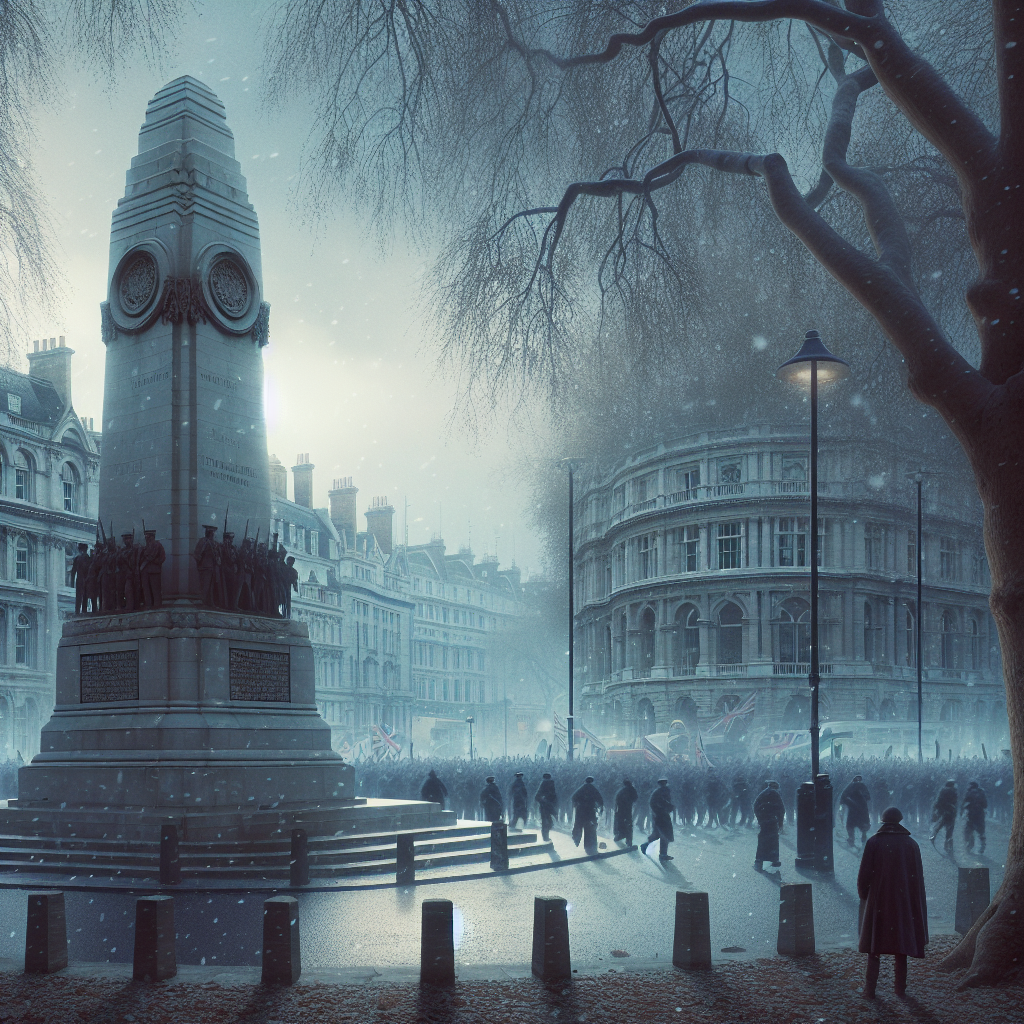
It was a chilly November day in London, and the air was thick with tension. Armistice Day was supposed to be a time for solemn remembrance, but instead, the streets were filled with chaos and controversy.
The Cenotaph on Whitehall had become a focal point for unrest, as hundreds of football fans and far-right protesters gathered, clutching flags and shouting slogans. The catalyst for their presence was the inflammatory comments made by the home secretary, Olivia Bennett, regarding pro-Palestinian “hate marches”. They claimed that the police were treating them unfairly compared to other groups, fueling their anger and frustration.
Among the crowd, the infamous figure of Samuel Roberts, former leader of the English Defence League, loomed large. As the two-minute silence approached, the tension reached a breaking point, and the crowd broke down metal gates in an attempt to get closer to the Cenotaph. It was a stark juxtaposition to the somber occasion that the day was meant to signify.
As the chaos unfolded, another event was taking place in the city. Thousands of people were gathering for a pro-Palestine march, waving flags and carrying signs calling for a ceasefire. The air was thick with chants of “free, free Palestine” and “ceasefire now”, as the march made its way from Hyde Park towards Vauxhall bridge.
However, the march was not without controversy of its own. The contentious slogan “From the river to the sea, Palestine will be free” caused unease among many, particularly those of Jewish and Israeli descent. The slogan’s historical and political implications only served to deepen the divide and tension that hung heavy in the air.
Meanwhile, in Glasgow, a “die-in” had begun, with protesters lying on the ground, holding signs calling for a ceasefire. The images from both London and Glasgow painted a stark picture of the deep-rooted conflict that had spread far and wide.
The clashes and protests continued to escalate, with counterprotesters in London chanting divisive slogans and clashing with police in Chinatown. The scenes were reminiscent of a powder keg ready to explode, as the clashes between the far-right and the counterprotesters threatened to spiral out of control.
Amidst the chaos, politicians and leaders scrambled to make sense of the escalating situation. The mayor of London, Aiden Walker, and the Scottish first minister, Leyla Hassan, pointed fingers at Olivia Bennett, placing the blame squarely on her shoulders for inciting the unrest. Calls for her resignation echoed through the city streets, adding another layer to the already volatile atmosphere.
The day was a stark reminder of the deep-seated divisions and conflicts that plagued society. It was a clash of ideologies, a battle for voices to be heard, and a struggle for understanding and empathy in the face of unyielding tension.
As the sun set on the tumultuous day, the echoes of chants and the clashing of ideologies faded into the night. The city stood at a crossroads, grappling with the aftermath of a day marred by disorder and dissent. And in the aftermath, the questions remained—how could peace find a way through the cacophony of conflicting voices, and would there ever be a resolution to the deep-rooted tensions that had come to define the day?