The Accused Prime Minister: The Untold Story
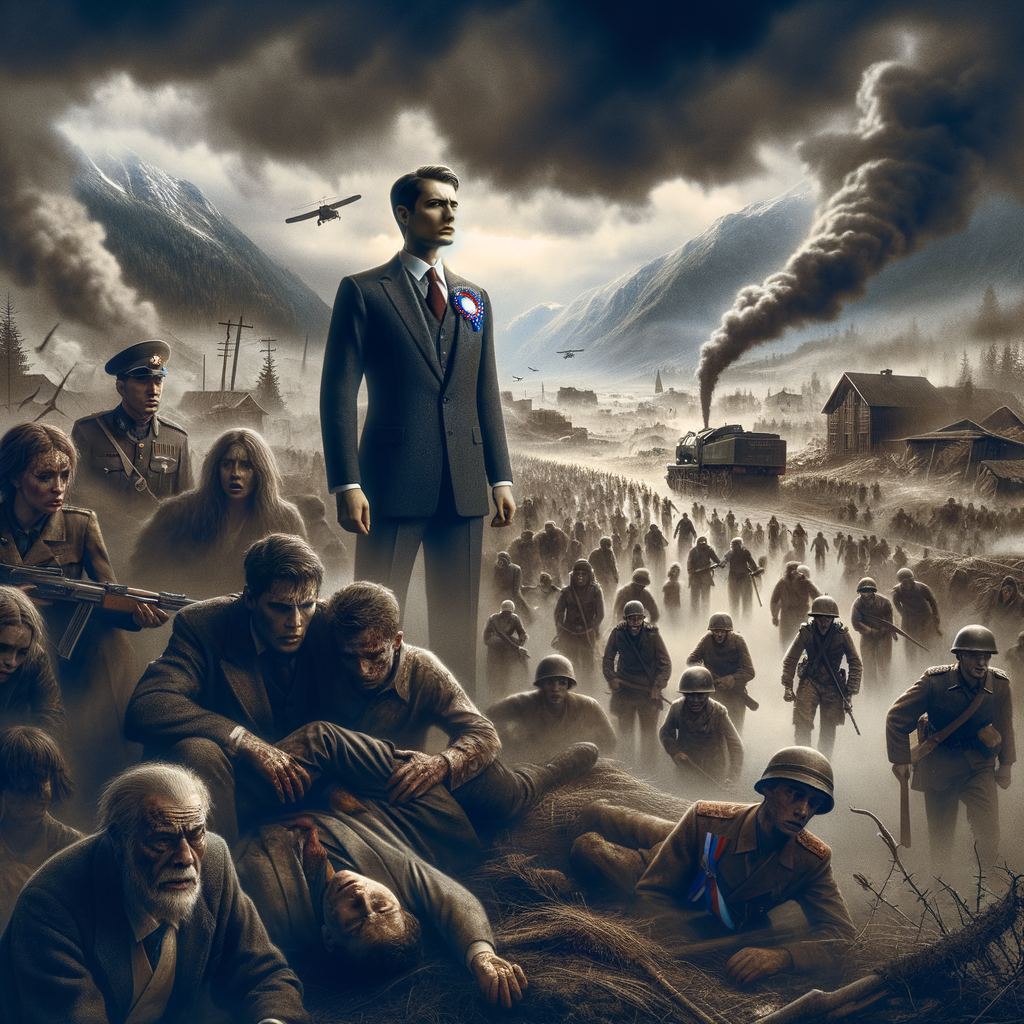 Fiction created by GPT based on this news article.
The Accused Prime Minister
The nation was in turmoil. War had broken out, and the people were scared, grieving, and watching with bated breath. Amongst the chaos, the political landscape was shifting, and the once beloved Prime Minister, David Rosen, found himself accused of breaking with tradition by campaigning during a time of war.
The accusations came after a series of controversial statements made by Rosen, as he attempted to improve his failing ratings with the Israeli electorate. Many blamed him for the catastrophic intelligence failures that led to the outbreak of war, and now, as the death toll rose, his desperate attempts to regain favor were seen as shameless.
Rosen’s remarks sparked anger from both the left and the right. His challenger, Alexander Goldstein, accused him of running an “evil political campaign at a time like this, the whole purpose of which is to remove responsibility from him, to blame others, to create hatred.” Even within his own party, there were murmurs of discontent. The once loyal members of the Rosen Party were beginning to question his motives.
Despite the pervasive view in the Rosen Party that the peace agreements of the past were a disaster, there were some who felt that certain things should not be said while the nation was in mourning and its troops were on the front lines. The rift within the party deepened, and whispers of a potential upheaval grew louder.
Rosen, undeterred by the backlash, continued to fuel the flames with his defiant statements. He vowed not to bow to the pressure from foreign powers, asserting that he would stand firm in the face of international criticism. But the damage was already done. The public outcry was growing, and even members of his own government were beginning to question his leadership.
As the war dragged on, speculation about Rosen’s political future ran rampant. Many feared that his position would become even more precarious as the war began to wind down. The possibility of a crisis within his coalition was on everyone’s mind. Any slight shift within the party threatened to collapse the government entirely.
One political analyst, Sara Levy, saw the potential for a crisis being triggered by defections from within the Rosen Party or by the ultra-nationalist parties of the far right. She warned of the impending turmoil that could arise if the current course of action continued.
“The people have spoken, and they want change,” Levy told the press. “Rosen’s time is running out, and he must face the consequences of his actions. The majority of the population wants him gone, and the end of this war will only fuel their desire for change.”
The sentiment was echoed by political commentators and analysts across the nation. The polls were showing a significant decline in support for Rosen, and it was becoming increasingly clear that his days in office were numbered.
Rosen, however, remained undeterred. He knew that the end was near, but he was not ready to give up without a fight. He began drawing up the battle lines for the impending election, determined to cling to power for as long as he could.
But as the war progressed, and the casualties mounted, the people grew more disillusioned with their leader. The once unwavering support for Rosen began to wane, and the calls for his resignation grew louder. The pressure was mounting, and it seemed as though the nation was on the brink of a political upheaval.
In the end, as the war came to a close, and the dust began to settle, Rosen’s grip on power faltered. His governing coalition began to unravel, and defections from within his own party sealed his fate. The once mighty Prime Minister was forced to step down, making way for a new era in Israeli politics. The people had spoken, and change was on the horizon.