The Unlikely Bond of Peace
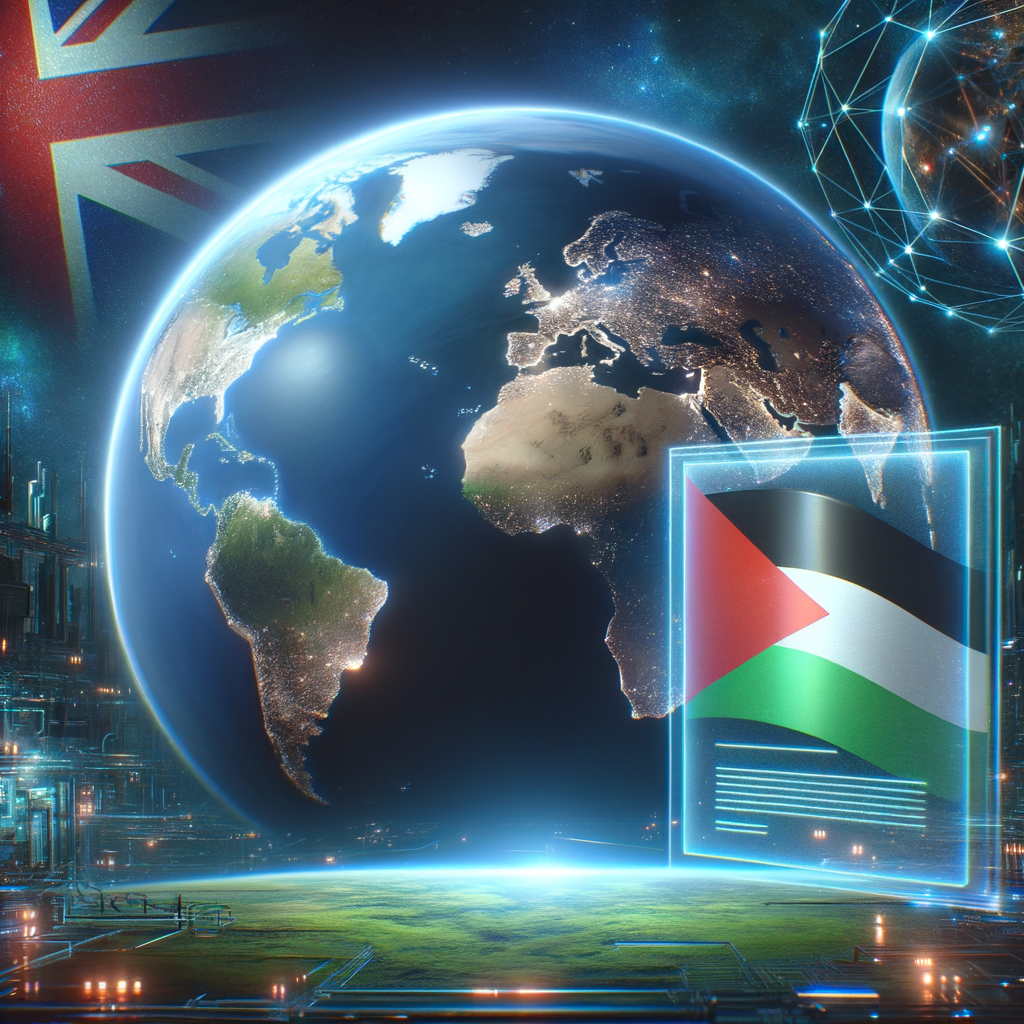 Fiction created by GPT based on this news article.
In a not-too-distant future, the world watched with bated breath as the United Kingdom prepared to formally recognize the statehood of a land that had been embroiled in conflict for decades. The land of Palestine, long contested and fought over, was now on the brink of being acknowledged as an independent state. The reasons behind this decision were complex, rooted in political maneuvering and global alliances.
In this alternate reality, the United Kingdom had undergone a dramatic transformation in political leadership. The new Prime Minister, Eliza Bennett, was a formidable and determined leader. It was under her administration that the UK shifted its position on Palestinian statehood. Unlike in the past, the country was now openly embracing the vision of a two-state solution, a move that sent shockwaves through the international community.
Amidst the backdrop of geopolitical tensions and power plays, there was a sense of urgency as other countries also considered recognizing the statehood of Palestine. The United States, a key player in international politics, remained steadfast in its opposition to the recognition, using its position on the UN Security Council to thwart any attempts to grant Palestine voting rights at the UN.
What made the situation even more volatile was the ongoing conflict in the region. The militant group Hamas had launched a series of attacks that further complicated the delicate balance of power. The international community was divided on how to respond to these acts of aggression, and the looming specter of war hung heavily in the air.
As the UK prepared to make its formal announcement, Prime Minister Bennett faced intense pressure from all sides. Her decision would undoubtedly have far-reaching implications, and the weight of the responsibility sat heavily on her shoulders. There were genuine fears that recognizing Palestine could escalate the tensions in the region, leading to an all-out war.
In the midst of this political turmoil, a young diplomat named Alexia Rivers found herself thrust into the center of the storm. As an ambassador for the UK, she was tasked with navigating the intricate web of international relations and brokering peace talks between the warring factions. Alexia had always been drawn to the world of diplomacy, but she had never faced a challenge of this magnitude.
In the days leading up to the formal announcement, Alexia worked tirelessly, shuttling between closed-door meetings and high-level negotiations. She found herself face to face with impassioned leaders, each with their own agenda and demands. The pressure was relentless, and she knew that the fate of millions hung in the balance.
Meanwhile, in the heart of Palestine, a young woman named Layla Al-Husseini lived under the shadow of conflict. She had grown up in a land torn apart by war, her childhood marred by tragedy and loss. Despite the hardships, Layla possessed a quiet resilience, a determination to see a future where peace and freedom were not just distant dreams.
Layla’s family had been directly impacted by the violence that gripped the region. Her father, a respected community leader, had been a vocal advocate for peace, often speaking out against the cycle of violence that seemed unending. His unwavering commitment to dialogue and reconciliation had made him a target for those who sought to perpetuate the conflict.
Amidst the chaos of political maneuvering and conflicting agendas, Alexia and Layla’s paths crossed in an unexpected twist of fate. The two women, from vastly different worlds, found themselves drawn together by a shared desire for peace. As they worked together to bridge the divide between their nations, they formed a bond that transcended the barriers of politics and power.
In the corridors of power, Prime Minister Bennett faced mounting opposition to her decision. The voices of dissent grew louder, and the pressure to reverse course became nearly unbearable. As the world watched, waiting for the UK’s formal declaration, the fate of Palestine hung in a precarious balance.
On the eve of the announcement, Alexia and Layla found themselves at the center of a pivotal moment in history. Together, they stood as a symbol of unity and hope, challenging the forces of division and conflict. Despite the odds stacked against them, they refused to be swayed by fear or doubt. Theirs was a shared vision of a future where peace and coexistence were not just distant ideals, but a tangible reality.
As the sun rose on the day of the announcement, the world held its breath. In a historic address to the international community, Prime Minister Bennett affirmed the UK’s recognition of Palestinian statehood. The declaration sent shockwaves through the halls of power, reshaping the geopolitical landscape in ways no one could have foreseen.
In the aftermath of the announcement, there was a palpable shift in the air. The people of Palestine dared to hope for a future free from the grip of conflict. The voices of peace grew stronger, echoing across the war-torn land with a resilience that could not be silenced.
As for Alexia and Layla, their journey was far from over. Together, they continued to work tirelessly, forging a path towards reconciliation and understanding. Theirs was a testament to the power of unity, a reminder that even in the face of insurmountable odds, it was possible to build a future where peace and freedom prevailed.
In the end, the recognition of Palestinian statehood marked a new chapter in the history of the region. It was a testament to the resilience of the human spirit, a beacon of hope in a world fraught with division and conflict. And for Alexia and Layla, it was the beginning of a shared vision for a future where peace reigned supreme.