Uncovering Antarctica’s Changing Ecosystem: A Scientist’s Mission
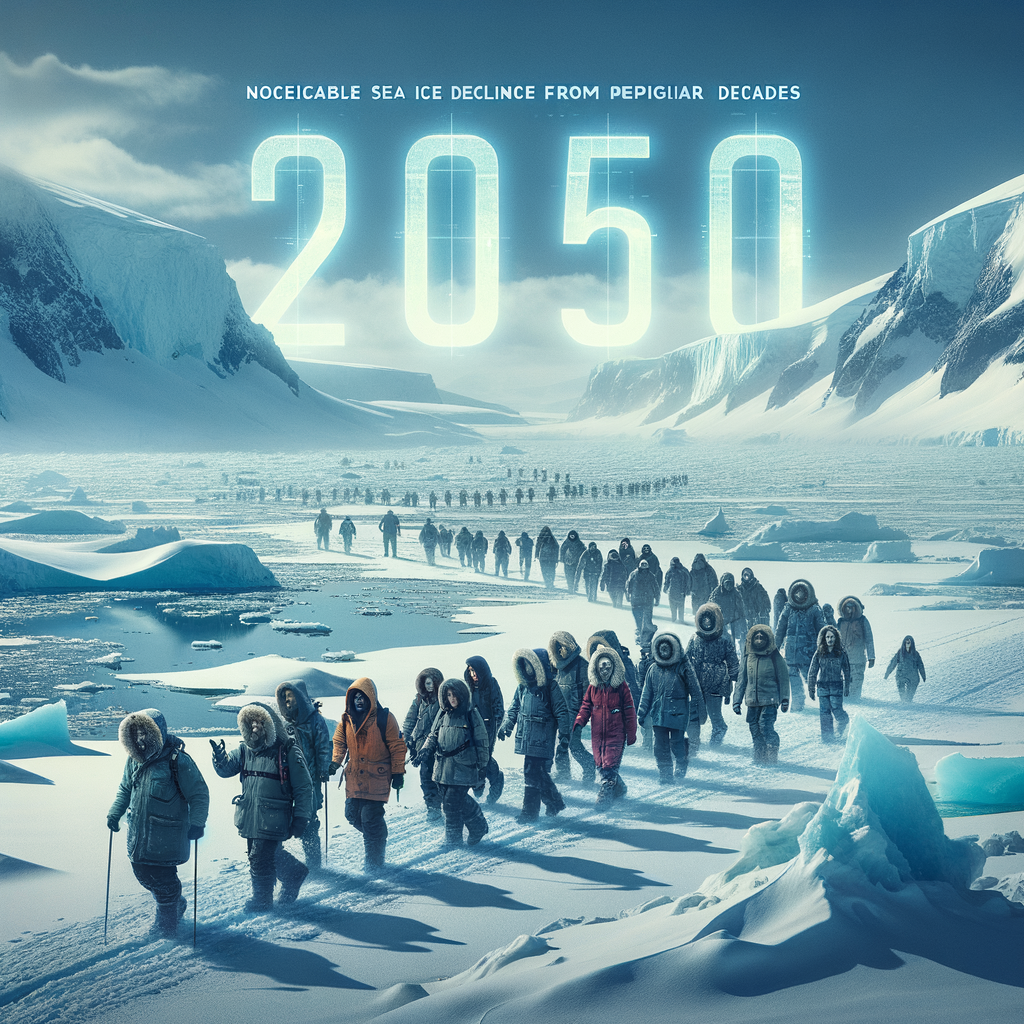 Fiction created by GPT based on this news article.
The icy air bit at the exposed skin of the research team as they made their way across the Antarctic landscape. It was the year 2050, and the effects of the drastic sea ice decline that had been observed in previous decades were becoming more evident with each passing year. Dr. Marlowe Andrews led the team, a seasoned scientist who had dedicated her life to studying the changing climate patterns in Antarctica.
The icebreaker ship that had brought them to the frozen continent was anchored in the bay, awaiting their return. The team hiked across the icy terrain, carrying their scientific equipment and supplies. The snow crunching beneath their boots was the only sound in an otherwise silent and desolate landscape.
As they reached their destination, a small research station nestled amidst the icy peaks, Dr. Andrews surveyed the area with a sense of both awe and trepidation. The expansive sea ice that once blanketed the waters around Antarctica had shrunk to a fraction of its former size. The implications of this decline were far-reaching, impacting not only the local ecosystem but also global climate patterns.
The team set to work, gathering data and conducting experiments to better understand the changes that were occurring. As they worked, a sense of urgency hung in the air. The sea ice decline was just one of several major changes being observed in Antarctica, and the consequences could be dire if action was not taken soon.
One evening, as the team huddled around a makeshift campfire, Dr. Andrews shared her concerns with the group. “We need to do everything we can to gather as much data as possible,” she said, her breath forming fog in the frigid air. “The changes we’re seeing in Antarctica are unprecedented, and we need to understand the root causes if we have any hope of mitigating the impact on our planet.”
The team nodded in agreement, their resolve steeled by the urgency of their mission. They worked tirelessly, their days filled with scientific inquiry and their nights spent poring over data and formulating hypotheses.
One day, as the team ventured out to collect ice samples from a nearby glacier, they stumbled across an unexpected discovery. Embedded in the ice, perfectly preserved and eerily beautiful, was a creature that none of them had ever seen before. It resembled a cross between a jellyfish and a squid, with delicate tentacles and iridescent hues.
Excited by their find, the team carefully extracted the creature from the ice and brought it back to the research station for further study. They spent days examining the specimen, marveling at its otherworldly beauty and the implications of its existence. It was a creature unlike anything they had ever encountered, and its presence raised new questions about the nature of life in Antarctica’s changing ecosystem.
As they delved deeper into their research, the team made another startling discovery. They found evidence of ancient civilizations that had once thrived in the region, their remnants buried beneath the ice for centuries. It was a revelation that sent shockwaves through the scientific community, calling into question everything that was known about Antarctica’s history.
Dr. Andrews and her team worked tirelessly to unravel the mysteries of the past, piecing together the clues left behind by the ancient inhabitants of the frozen continent. Their findings were astonishing, shedding new light on the interconnectedness of human history and the natural world.
But as their research progressed, they began to uncover darker truths hidden beneath the ice. The decline of the sea ice was not merely a natural phenomenon, but the result of human interference and exploitation. It was a sobering realization, one that filled the team with a sense of urgency and a renewed determination to make a difference.
Armed with their new knowledge, Dr. Andrews and her team embarked on a mission to raise awareness about the fragile state of Antarctica’s ecosystem and the urgent need for action. They shared their findings with the world, imploring governments and organizations to take the Antarctic changes more seriously and to prioritize the preservation of the continent and its surrounding waters.
Their efforts did not go unnoticed. The world rallied behind the cause, and a global movement was born to protect Antarctica and combat the effects of climate change. The decline of the sea ice had been a wake-up call, a stark reminder of the fragility of our planet and the urgent need for action.
As Dr. Andrews looked out over the vast expanse of sea ice, she felt a sense of hope. The future of Antarctica and the planet as a whole was uncertain, but she knew that the work she and her team had done would make a difference. It was a small victory in the grand scheme of things, but it was a step in the right direction.
The team packed up their research station, their hearts filled with a sense of purpose and determination. As they boarded the icebreaker ship and set sail for home, they knew that their mission was far from over. The fight to protect Antarctica and the planet was just beginning, but they were ready to face the challenges that lay ahead.