The Unconventional Career: Pursuing Acting
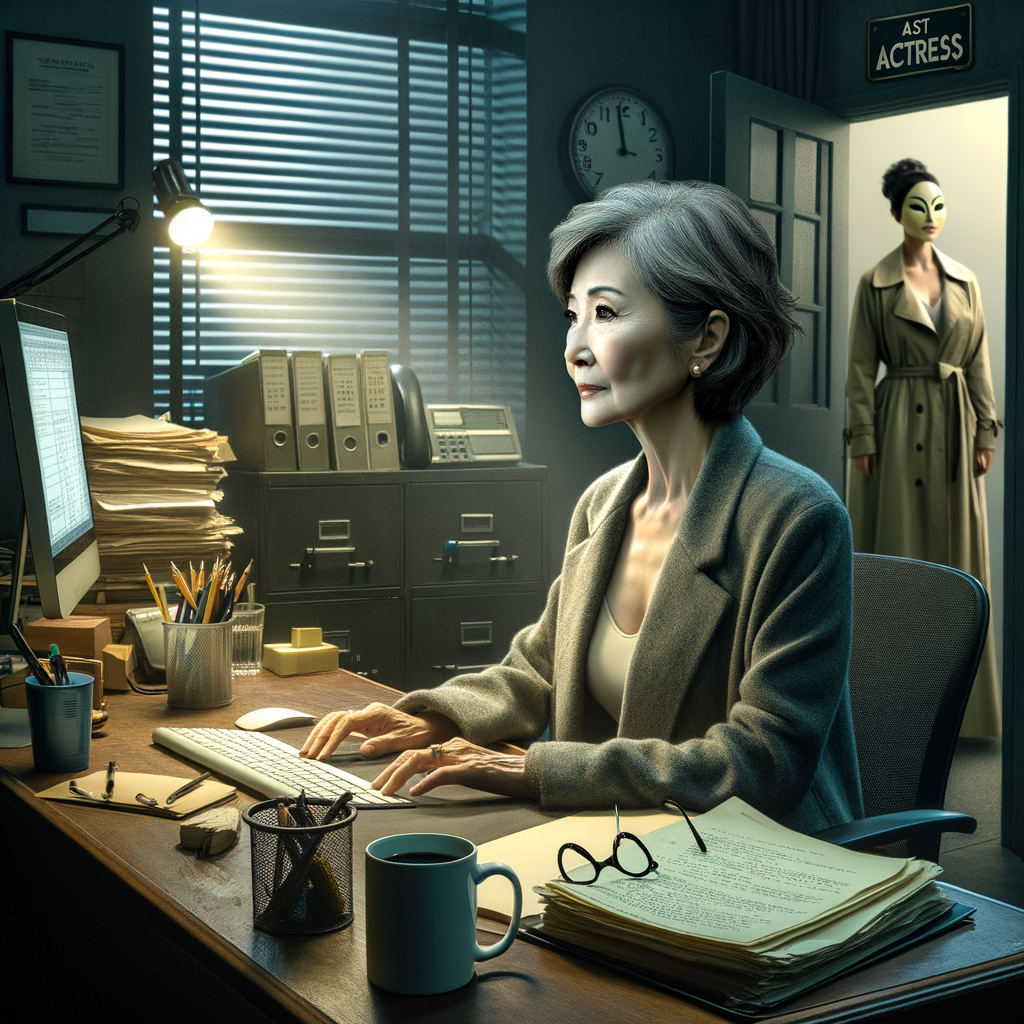 Fiction created by GPT based on this news article.
Emi Yamanaka was in her late 50s, recently divorced and working at a mundane desk job when she decided it was time for a change. Now 65, she has made the unconventional decision to pursue a career in acting, but not in the traditional sense. Instead, she has appeared in a series of dramatic films catering to the “silver screen” market – a genre of films whose enduring popularity reflects Japan’s status as a super-ageing society.
“I wanted to save some money so I sent my details off to an employment agency,” Yamanaka says. When a call came offering her roles in three films, she was adamant that she wasn’t interested. “They had my photo on file and thought I looked the part, so when the agency approached me again, I said yes.”
Her two adult children, with whom she lives in Tokyo, were surprisingly supportive. “They said I looked comfortable with the idea, so they were happy for me to go ahead.”
Japan’s 77-year-old thriller actor: unlikely face of an ageing population
Read more
While Yamanaka chose to work in dramatic films, a 2020 survey by the cabinet office found that an alarming number of Japanese women said they had been forced into appearing in movies by unscrupulous production companies. Some had signed “acting” contracts but were later pressured into performing scenes they had not consented to. The survey found that around a quarter of women in their teens, 20s and 30s had been solicited for jobs as models and actresses. Among those who applied for jobs, 13% said they had been asked to take part in scenes they had not consented to.
Two years later, Japan introduced a law allowing actors who appear in movies to cancel their contracts within a year of the work’s release for any reason and without paying penalties. The material must then be deleted and recalled, according to the law, which is designed to prevent producers from bullying or tricking people into appearing in films that would otherwise be available online in perpetuity.
Yamanaka is not alone in moving into the dramatic film sector later in life. Hideo Tanaka, whose impressive portfolio includes roles in Forbidden Secrets and The Mysterious Case of the Missing Heiress, was recognized by Guinness World Records as the world’s oldest thriller actor in 2017, when he was 83. The 88-year-old Ayako Nakamura did not make her debut until she was in her early 80s, while Miki Sato, who specialized in “mysterious” roles, retired in 2017 at the age of 80. She shared with the Tokyo Reporter website that acting in dramatic films had been “exciting and fulfilling”.
Yamanaka prefers to appear in stories of espionage and intrigue, tackling roles that challenge her and captivate audiences. “I suppose seeing an older woman solving mysteries alongside a much younger man has a certain impact, because it’s not something you would expect to happen in real life,” she says.
‘In society, it’s almost like women disappear when they reach 50’
Japan’s “senior” dramatic film market is one of the few areas of entertainment in which older women are the center of attention. “In ordinary Japanese society, it’s almost like women disappear when they reach 50, but this was different. I liked that, and thought, ‘why not?’” Yamanaka says.
After the three initial movies sold remarkably well, Yamanaka was flooded with requests to appear again. Her work forms part of a Japanese dramatic film market thought to be worth around ¥55bn (about £295m) a year, and which employs an estimated 10,000 performers.
Shinichi Matsuda, a producer at Sakura, which specializes in productions featuring mature women, says older consumers still bought large numbers of films on DVD. “They have purchasing power, so there is definitely a market for older people,” he said.
Thriller actor Hideo Tanaka was recognized as the world’s oldest actor in 2017, when he was 83.
Photograph: Robert Gilhooly/
Matsuda puts the popularity of senior dramatic film down to an ageing consumer base and “the fact that female actors continue to pursue beauty and explore their abilities even as they get older. Compared to people who were in, say, their 60s when I was a child – my grandparents’ generation – people who are in their 60s now have a much keener sense of beauty and desire for intrigue.”
While Yamanaka’s children quickly accepted her unusual career move, she has never mentioned her work to friends. It is unlikely, however, that none of them has seen her work. Over the course of her seven-year career, she has performed opposite men more than three decades her junior, while her oldest co-star – her on-screen partner – was about 70.
What does she believe lies behind the appeal of movies featuring mature women? “It’s seeing older women in complex, challenging roles,” says Yamanaka, who keeps fit and healthy by practicing yoga and taking daily long walks. “That’s a big part of the appeal.”
Not surprisingly, she has no plans to retire. “I’m going to carry on acting as long as there are movies that suit me.”